
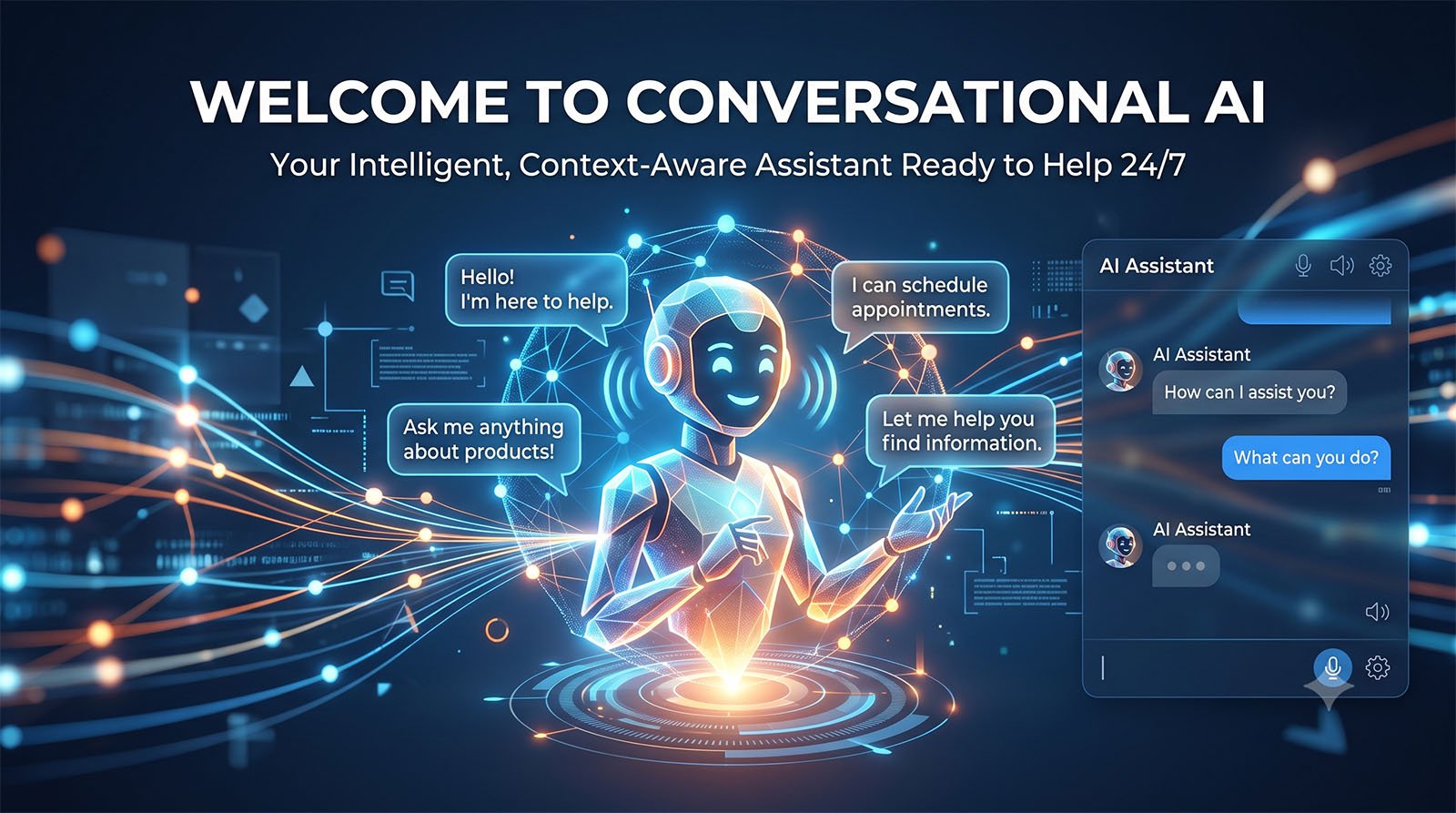
Conversational AI goes way beyond simple voice recognition or keyword-matching software—it creates fluid, natural, and context-aware dialogue across voice and text channels. Instead of forcing users to navigate frustrating phone trees or rigid command menus, conversational interfaces understand intent, tone, dialect, and nuance. They maintain context across long interactions, remember what was said three turns ago, and gracefully handle interruptions or abrupt topic shifts. Whether deployed in voice response systems, mobile apps, or web platforms, conversational AI creates human-grade communication that resolves complex customer needs on the spot. It eliminates the friction between humans and technology, making digital interactions feel less like operating software and more like talking to a helpful specialist.
We combine advanced natural language understanding (NLU) with deep machine learning algorithms to enable scalable conversational workflows across channels. Whether building intelligent virtual assistants or automating lead capture, our tailored solutions deliver high accuracy, contextual awareness, and real-time response capability for continuous improvement.
Real-Time Intent Recognition
Enterprise Data Security Guarantees
What Benefits?
Automating customer interactions with Conversational AI delivers rapid, measurable ROI by providing instant resolution, operational scale, and improved customer experience without proportional overhead.
- 24/7 Availability and Instant Support
- Scalable Multi-Channel Integration
- Personalized User Engagement
- Reduced Operational Overhead
- Data-Driven Customer Insights
- Automated Lead Qualification


