- P 3/19 Muhammadia Colony Susan Road
- info@aisolutions.pk

-
Opening Hour Mon - Sat 9:00 - 6:30, Sunday - CLOSED
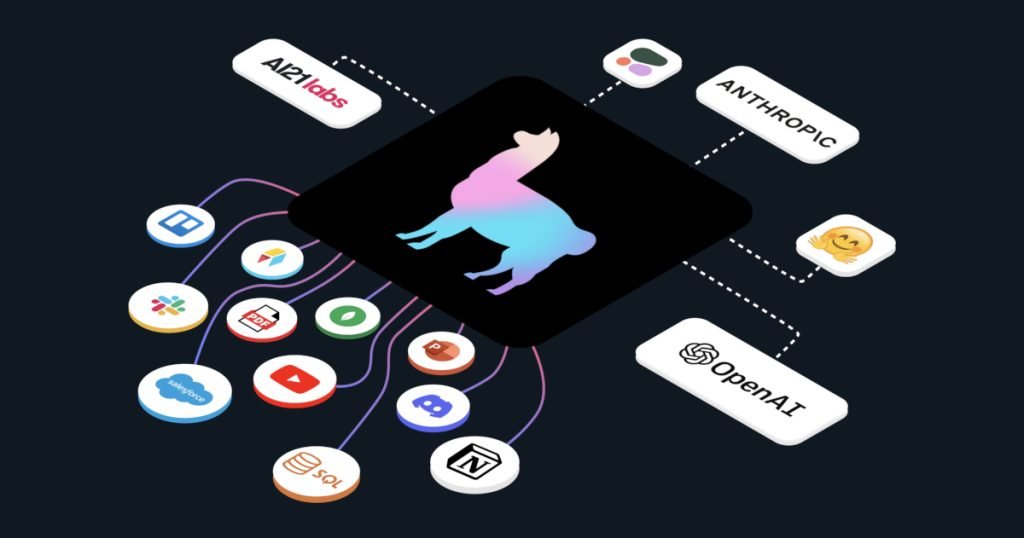
LLM Orchestration
Large Language Models are incredibly powerful, but using them effectively in business requires more than just calling an API. LLM Orchestration is the backbone that ties multiple models, prompts, routing logic, and guardrails together into a unified, high-performing engine. Instead of relying on a single model for every task, orchestration routes simple queries to fast, cost-effective models while sending complex reasoning tasks to heavier options.
It manages context windows, controls API costs, handles fallback logic if a service drops, and enforces strict security boundaries to prevent data leaks or unexpected outputs. By structuring how data flows into and out of your AI models, orchestration turns raw, unpredictable AI into a reliable, enterprise-ready infrastructure that delivers fast, accurate, and cost-efficient results every single time.
Dynamic Prompt Management
Automated prompt engineering, template versioning, and contextual optimization for predictable model outputs.
Intelligent Model Routing
Cost and performance-aware routing that sends queries to the most appropriate model (e.g., GPT-3.5 vs. GPT-4) dynamically.
What Benefits?
Move beyond basic API calls and build sophisticated, multi-step AI workflows. LLM Orchestration ensures your generative AI applications are efficient, safe, cost-effective, and capable of complex, contextual problem-solving.